The Freehof Blog
Texts, Sources, Opinions, and Arguments
What is Progressive Halakhah? Part 7
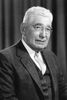
How Solomon B. Freehof Created a Reform Halakhic Discourse In Part 6 of this series, we considered the role of Rabbi Solomon B. Freehof (1892-1990) in the development of progressive halakhah, especially his contribution as a theorist, his work in formulating a rationale for halakhic writing by Reform and, by extension, other non-Orthodox Jews. In this installment, we look at one more aspect of that role: not only did Freehof tell us why Reform Judaism ought to engage with the halakhic tradition, he also showed us how it could be done. It was Freehof who laid the foundations for a Reform halakhic discourse. Continue reading on The Freehof Institute Substack. What Is Progressive Halakhah? Part 6 Rabbi Solomon B. Freehof on Liberal Judaism and the Halakhah April 13, 2026 Rabbi Solomon B. Freehof (1892-1990), the greatest Reform posek and the namesake of our institute, is best known for his lifetime of work in the field of Reform halakhah and the creation of a substantial Reform halakhic literature. He is less known, however, as a theorist of Reform halakhah who forged an argument that Reform Jews do participate in the halakhic tradition, that halakhah is relevant, even vital, to any serious conception of Reform Judaism. This post seeks to correct that situation. Continue reading on The Freehof Institute Substack. What Is Progressive Halakhah? Part 5 On Progress in Halakhic Thinking February 8, 2026 In Part 4 and Part 4.5 of this series, we discussed a central commitment of progressive halakhah: the refusal to justify unjustifiable halakhic rules. Our example was the rule that restricts the scope of the principle pikuaḥ nefesh doḥeh et hashabbat: though saving human life takes priority over the prohibitions of Shabbat, we are forbidden to violate Shabbat to rescue a non-Jew. The rule is “unjustifiable” because it transgresses the article of faith (a sine qua non for liberals and progressives) that all human life, created in the image of God, is sacred and worthy of our utmost care. Efforts to rationalize it, we said, are unpersuasive and, frankly, embarrassing.2 Efforts to neutralize it are similarly doomed to failure. So what do we do when we confront this or any other unjustifiable traditional halakhic rule? Continue reading on The Freehof Institute Substack.
Preemptive War and Preventive War
July 1, 2025 Military ethics distinguishes between "preemptive war" (good) and "preventive war" (bad). So does the halakhic tradition. Both disciplines define those categories with a fair degree of precision. In the wake of the Israeli and American strikes against Iran's nuclear and military facilities this past month, maybe it's time to reconsider those definitions. [more]
Fatal Contradictions? Progressive Halakhah According to Yogi Berra
March 16, 2025 Does a fatal contradiction lie at the heart of the project called “progressive halakhah”? It’s an article of faith for those of us in the field that traditional Jewish law, properly read and interpreted, does not conflict with the liberal values that govern contemporary culture and society. But there are times when Jewish law, despite our best efforts at liberal interpretation, yields conclusions that are decidedly non-liberal. When that happens, when we find ourselves unable to reconcile between halakhah and our values, we have no recourse but to choose the one or the other. Thus the fatal contradiction: when conflict occurs you can accept the decision yielded by the halakhic process, or you can declare that our liberal standards of justice and equity take precedence over Jewish law. But you can’t have it both ways. We disagree. We think, rather, that you can have it both ways. That’s because we accept the advice of that great rabbi, Yogi Berra, z”l: “when you come to a fork in the road, take it.” [more]
Senator Adam Schiff and the Mishneh Torah
December 17, 2024 Adam Schiff, newly elected U.S. Senator from California, was sworn into office while placing his hand on - wait for it - a volume of the 1490 Soncino edition of Rambam's Mishneh Torah. We at the Freehof Institute are thrilled that he chose a work of halakhah for the oath-taking... well, sort of thrilled. We're wondering whether the Mishneh Torah was the best sefer he could have chosen? For this highly symbolic ritual act, was it the wrong symbol? [more]
|
|
|
Contact us | site map | legal notices
Designed by Nu Creative Co.


RSS Feed